viernes, octubre 06, 2006

Pico y patas extrañas para un citadino - ¿este bicho pica?

Recuerdan la nota que escribí sobre un ave desconocida para un citadino como yo, creo que fue en marzo...

Bueno, ese bicho ahora apareció casi casi dentro de mi casa, en una escalera caracol que lleva al techo.


Díganme... ¿este animal ataca al ser humano?

Podría haber alargado la mano para saber que textura tiene... pero las patas y el pico mi disuadieron.

Parece que tiene dueño... pues los amarres aun los luce en las patas... ¿es este un animal domesticado?

En el post anterior algunos dijeron que era un "Gavilàn Caminera" y otro un "cernícalo primilla".

Pero...¿son estas especies asiduas del cemento en un desierto como Lima ?

martes, octubre 03, 2006

La próxima navidad...

http://www.mdcenter.nl/redirect.php?file=http://www.mdcenter.nl/artikelen/mzrh1/index_en.php

MZ-RH1
minidisc

ojalá.

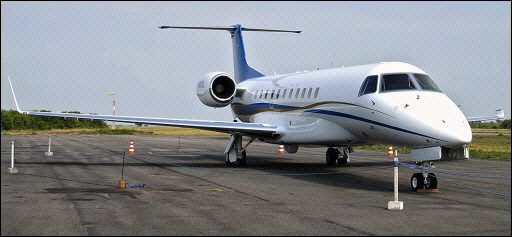
Pasajero del Jet Legacy cuenta lo sucedido

La columna de Joe Sharkey, en el NYT

SÃO JOSE DOS CAMPOS, Brazil, Oct. 1 — It had been an uneventful, comfortable flight.

With the window shade drawn, I was relaxing in my leather seat aboard a $25 million corporate jet that was flying 37,000 feet above the vast Amazon rainforest. The 7 of us on board the 13-passenger jet were keeping to ourselves.

Without warning, I felt a terrific jolt and heard a loud bang, followed by an eerie silence, save for the hum of the engines.

And then the three words I will never forget. “We’ve been hit,” said Henry Yandle, a fellow passenger standing in the aisle near the cockpit of the Embraer Legacy 600 jet.

“Hit? By what?” I wondered. I lifted the shade. The sky was clear; the sun low in the sky. The rainforest went on forever. But there, at the end of the wing, was a jagged ridge, perhaps a foot high, where the five-foot-tall winglet was supposed to be.

And so began the most harrowing 30 minutes of my life. I would be told time and again in the next few days that nobody ever survives a midair collision. I was lucky to be alive — and only later would I learn that the 155 people aboard the Boeing 737 on a domestic flight that seems to have clipped us were not.

Investigators are still trying to sort out what happened, and how — our smaller jet managed to stay aloft while a 737 that is longer, wider and more than three times as heavy, fell from the sky nose first.

But at 3:59 last Friday afternoon, all I could see, all I knew, was that part of the wing was gone. And it was clear that the situation was worsening in a hurry. The leading edge of the wing was losing rivets, and starting to peel back.

Amazingly, no one panicked. The pilots calmly starting scanning their controls and maps for signs of a nearby airport, or, out their window, a place to come down.

But as the minutes passed, the plane kept losing speed. By now we all knew how bad this was. I wondered how badly ditching — an optimistic term for crashing — was going to hurt.

I thought of my family. There was no point reaching for my cellphone to try a call — there was no signal. And as our hopes sank with the sun, some of us jotted notes to spouses and loved ones and placed them in our wallets, hoping the notes would later be found.

I was focused on a different set of notes when the flight began. I’ve contributed the “On the Road”column for The New York Times business-travel section every week for the last seven years. But I was on the Embraer 600 for a freelance assignment for Business Jet Traveler magazine.

My fellow passengers included executives from Embraer and a charter company called ExcelAire, the new owner of the jet. David Rimmer, the senior vice president of Excel Aire, had invited me to ride home on the jet his company had just taken possession of at Embraer’s headquarters here.

And it had been a nice ride. Minutes before we were hit, I had wandered up to the cockpit to chat with the pilots, who said the plane was flying beautifully. I saw the readout that showed our altitude: 37,000 feet.

I returned to my seat. Minutes later came the strike (it sheared off part of the plane’s tail, too, we later learned).

Immediately afterward, there wasn’t much conversation.

Mr. Rimmer, a large man, was hunched in the aisle in front of me staring out the window at the newly damaged wing.

“How bad is it?” I asked.

He fixed me with a steady look and said, "I don’t know."

I saw the body language of the two pilots. They were like infantrymen working together in a jam, just as they had been trained to do.

For the next 25 minutes, the pilots, Joe Lepore and Jan Paladino, were scanning their instruments, looking for an airport. Nothing turned up.

They sent out a Mayday signal, which was acknowledged by a cargo plane somewhere in the region. There had been no contact with any other plane, and certainly not with a 737 in the same airspace.

Mr. Lepore then spotted a runway through the darkening canopy of trees.

“I can see an airport,” he said.

They tried to contact the control tower at what turned out to be a military base hidden deep in the Amazon. They steered the plane through a big wide sweep to avoid putting too much stress on the wing.

As they approached the runway, they had the first contact with air traffic control.

“We didn’t know how much runway we had or what was on it,” Mr. Paladino would say later that night at the base in the jungle at Cachimbo.

We came down hard and fast. I watched the pilots wrestle the aircraft because so many of their automatic controls were blown. They brought us to a halt with plenty of runway left. We staggered to the exit.

“Nice flying,” I told the pilots as I passed them. Actually, I inserted an unprintable word between “nice” and “flying.”

“Any time,” Mr. Paladino, said with an anxious smile.

Later that night they gave us cold beer and food at the military base. We speculated endlessly about what had caused the impact. A wayward weather balloon? A hot-dogging military fighter jet whose pilot had bailed? An airliner somewhere nearby that had blown up, and rained debris on us?

Later that night they gave us cold beer and food at the military base. We speculated endlessly about what had caused the impact. A wayward weather balloon? A hot-dogging military fighter jet whose pilot had bailed? An airliner somewhere nearby that had blown up, and rained debris on us?

Whatever the cause, it had become clear that we had been involved in an actual midair crash that none of us should have survived.

In a moment of gallows humor at the dormlike barracks where we were to sleep, I said, “Maybe we are all actually dead, and this is hell — reliving college bull sessions with a can of beer for eternity.”

About 7.30 p.m. Dan Bachmann, an Embraer executive and the only one among us who spoke Portuguese, came to the table in the mess hall with news from the commander’s office. A Boeing 737 with 155 people on board was reported missing right where we had been hit.

Before that moment, we had all been bonding, joking about our close call. We were the Amazon Seven, living now on precious time that no longer belonged to us but somehow we had acquired. We would have a reunion each year and report on how we used our time.

Instead we now bowed our heads in a long moment of silence, with the sound of muffled tears.

Both pilots, experienced corporate jet pilots, were shaken by the ordeal. “If anybody should have gone down it should have been us,” Mr. Lepore, 42, of Bay Shore, N.Y., kept saying.

Mr. Paladino, 34, of Westhampton, N.Y., was barely able to speak. “I’m just trying to settle in with the loss of all those people. It is really starting to hurt,” he said.

Mr. Yandle told them: “You guys are heroes. You saved our lives.” They smiled wanly. It was clear the weight of all this would remain with them forever.

The next day, the base was swarming with Brazilian authorities investigating the accident and directing search operations for the downed 737, which an officer told me lay in an area less than 100 miles south of us that could be reached only by whacking away by hand at dense jungle.

We also got access to our plane, which was being pored over by inspectors. Ralph Michielli, vice president for maintenance at ExcelAire and a fellow passenger on the flight, took me up on a lift to see the damage to the wing near the sheared-off winglet.

A panel near the leading edge of the wing had separated by a foot or more. Dark stains closer to the fuselage showed that fuel had leaked out. Parts of the horizontal stabilizer on the tail had been smashed, and a small chunk was missing off the left elevator.

A Brazilian military inspector standing by surprised me by his willingness to talk, although the conversation was limited by his weak English and my nonexistent Portuguese.

He was speculating on what happened, but this is what he said: Both planes were, inexplicably, at the same altitude in the same space in the sky. The southeast-bound 737 pilots spotted our Legacy 600, which was flying northwest to Manaus, and made a frantic evasive bank. The 737 wing, swooping into the space between our wing and the high tail, clipped us twice, and the bigger plane then went into its death spiral.

It sounded like an impossible situation, the inspector acknowledged. “But I think this happened,” he said. Though no one can say for certain yet how the accident occurred, three other Brazilian officers told me they had been informed that both planes were at the same altitude.

Why did I — the closest passenger to the impact — hear no sound, no roar of a big 737?

I asked Jeirgem Prust, a test pilot for Embraer. This was the following day, when we had been transferred from the base by military aircraft to a police headquarters in Cuiaba. That’s where authorities had laid claim to jurisdiction and where the pilots and passengers of the Legacy 600, including me, would be questioned until dawn by an intense police commander and his translators.

Mr. Prust took out a calculator and tapped away, figuring the time that would be available to hear the roar of a jet coming at another jet, each flying at over 500 miles an hour in opposite directions. He showed me the numbers. “It’s far less than a split second,” he said. We both looked at the pilots slouched on couches across the room.

“These guys and that plane saved our lives,” I said.

“By my calculations,” he agreed.

I later thought that perhaps the pilot of the Brazilian airliner had also saved our lives because of his quick reactions. If only his own passengers could say the same.

At the police headquarters, we were required to write on a sheet of paper our names, addresses, birthdates, occupations and levels of education, plus the names of our parents. We were all also required to submit to an examination by a physician with long hair who wore a white gown that draped almost to his shins. We were required to strip to the waists for photographs front and back.

This, explained the physician, whose name I did not get but who described himself to me as a “forensic doctor,” was to prove that we had not been tortured “in any way.”

Again gallows humor rose despite our attempts to discourage it.

“This guy’s the coroner,” Mr. Yandle explained later, and then added, “I think that means we are actually dead.”

But laughs, such as they were, died out by now as we thought again and again of the bodies still unclaimed in the jungle, and how their lives and ours had intersected, literally and metaphorically, for one horrible split second.

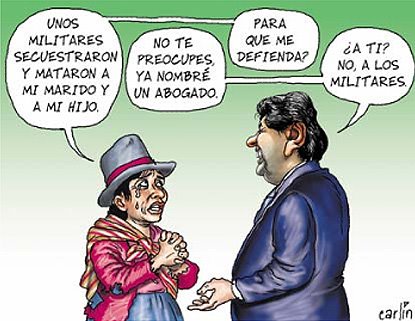
Gran incendio en depósito de municiones, ja ja

Hoy leo en el diario Correo en línea que un almacén de municiones del Ejército peruano ha reventado en el distrito de Belén, Iquitos.

Justo 6 días después que se destape el tráfico de armas para las FARC, y oh coincidencia, 3 días después que el ministro de defensa anuncia el inventario general de los depósitos de municiones.

lunes, octubre 02, 2006

Jet Legacy: blog de un sobreviviente en accidente de Brasil

Chocar con un Boeing 737/800 y vivir para contarlo. Eso es lo que le ha ocurrido al blogger Joe Sharkey, periodista del NYT. Esperemos que en los próximos días suba una crónica detallada de lo sucedido, y que logré una entrevista con los pilotos del jet que lo transportaba.

Después de varios días del aterrizaje forzoso del Legacy, por fin, la Fuerza aérea brasileña se ha animado a publicar la foto del aparatito de marras.


Lo miro y no lo creo. No le veo un solo raspón. ¿Cómo hicieron?
Quizás debí comenzar este post: Como chocar con un Boeing 737 sin dejar huellas.

A ver si Joe Sharkey nos esclarece esta duda.


Chocar chocar... la palabra me parece demasiado grande.


Relacionado:

Noticia ampliada en yahoo y más fotos

Noticia en Folha, inundado de elecciones, pero ahí esta el avión pintando su nota.


Una cosa más, en los comments del blog de Joe se ha iniciado una discusión sobre la retención de los pilotos. Joe Sharkey no comprende porque los han retenido. Si hubiera sucedido en gringolandia, temen los comentaristas, los halcones ya estarían torturando a los pilotos del jet.

Actualización 3 de octubre:


Un fotógrafo con más tino nos despeja la duda. La columna de Joe Sharkey, en el NYT.


SÃO JOSE DOS CAMPOS, Brazil, Oct. 1 — It had been an uneventful, comfortable flight.

With the window shade drawn, I was relaxing in my leather seat aboard a $25 million corporate jet that was flying 37,000 feet above the vast Amazon rainforest. The 7 of us on board the 13-passenger jet were keeping to ourselves.

Without warning, I felt a terrific jolt and heard a loud bang, followed by an eerie silence, save for the hum of the engines.

And then the three words I will never forget. “We’ve been hit,” said Henry Yandle, a fellow passenger standing in the aisle near the cockpit of the Embraer Legacy 600 jet.

“Hit? By what?” I wondered. I lifted the shade. The sky was clear; the sun low in the sky. The rainforest went on forever. But there, at the end of the wing, was a jagged ridge, perhaps a foot high, where the five-foot-tall winglet was supposed to be.

And so began the most harrowing 30 minutes of my life. I would be told time and again in the next few days that nobody ever survives a midair collision. I was lucky to be alive — and only later would I learn that the 155 people aboard the Boeing 737 on a domestic flight that seems to have clipped us were not.

Investigators are still trying to sort out what happened, and how — our smaller jet managed to stay aloft while a 737 that is longer, wider and more than three times as heavy, fell from the sky nose first.

But at 3:59 last Friday afternoon, all I could see, all I knew, was that part of the wing was gone. And it was clear that the situation was worsening in a hurry. The leading edge of the wing was losing rivets, and starting to peel back.

Amazingly, no one panicked. The pilots calmly starting scanning their controls and maps for signs of a nearby airport, or, out their window, a place to come down.

But as the minutes passed, the plane kept losing speed. By now we all knew how bad this was. I wondered how badly ditching — an optimistic term for crashing — was going to hurt.

I thought of my family. There was no point reaching for my cellphone to try a call — there was no signal. And as our hopes sank with the sun, some of us jotted notes to spouses and loved ones and placed them in our wallets, hoping the notes would later be found.

I was focused on a different set of notes when the flight began. I’ve contributed the “On the Road”column for The New York Times business-travel section every week for the last seven years. But I was on the Embraer 600 for a freelance assignment for Business Jet Traveler magazine.

My fellow passengers included executives from Embraer and a charter company called ExcelAire, the new owner of the jet. David Rimmer, the senior vice president of Excel Aire, had invited me to ride home on the jet his company had just taken possession of at Embraer’s headquarters here.

And it had been a nice ride. Minutes before we were hit, I had wandered up to the cockpit to chat with the pilots, who said the plane was flying beautifully. I saw the readout that showed our altitude: 37,000 feet.

I returned to my seat. Minutes later came the strike (it sheared off part of the plane’s tail, too, we later learned).

Immediately afterward, there wasn’t much conversation.

Mr. Rimmer, a large man, was hunched in the aisle in front of me staring out the window at the newly damaged wing.

“How bad is it?” I asked.

He fixed me with a steady look and said, "I don’t know."

I saw the body language of the two pilots. They were like infantrymen working together in a jam, just as they had been trained to do.

For the next 25 minutes, the pilots, Joe Lepore and Jan Paladino, were scanning their instruments, looking for an airport. Nothing turned up.

They sent out a Mayday signal, which was acknowledged by a cargo plane somewhere in the region. There had been no contact with any other plane, and certainly not with a 737 in the same airspace.

Mr. Lepore then spotted a runway through the darkening canopy of trees.

“I can see an airport,” he said.

They tried to contact the control tower at what turned out to be a military base hidden deep in the Amazon. They steered the plane through a big wide sweep to avoid putting too much stress on the wing.

As they approached the runway, they had the first contact with air traffic control.

“We didn’t know how much runway we had or what was on it,” Mr. Paladino would say later that night at the base in the jungle at Cachimbo.

We came down hard and fast. I watched the pilots wrestle the aircraft because so many of their automatic controls were blown. They brought us to a halt with plenty of runway left. We staggered to the exit.

“Nice flying,” I told the pilots as I passed them. Actually, I inserted an unprintable word between “nice” and “flying.”

“Any time,” Mr. Paladino, said with an anxious smile.

Later that night they gave us cold beer and food at the military base. We speculated endlessly about what had caused the impact. A wayward weather balloon? A hot-dogging military fighter jet whose pilot had bailed? An airliner somewhere nearby that had blown up, and rained debris on us?

Later that night they gave us cold beer and food at the military base. We speculated endlessly about what had caused the impact. A wayward weather balloon? A hot-dogging military fighter jet whose pilot had bailed? An airliner somewhere nearby that had blown up, and rained debris on us?

jueves, septiembre 21, 2006

Periodismo culural...algunas lecturas...

Periodismo Cultural en México (¿y latinoamérica?)

Dando hoy otra vuelta por la Facultad de ciencias y artes de la comunicación encontré en un panel una nota sobre periodismo cultural:

Periodismo Cultural

¿Qué pasa cuando Salamanca ya non presta? Gabriel Zaid anota las razones del lamentable estado de nuestro periodismo cultural y propone una solución pragmática que cimiente la lenta solución que pide el problema: el ejercicio de la verificación de datos, regular en otras tradiciones.

Lea e imprima el artículo completo aquí: Periodismo Cultural por Gabriel Zaid


Del mismo autor encontré este texto:

Organizados para no leer por Gabriel Zaid
"Existe una enorme diferencia entre leer y leer. El lector clásico, que iba de tapa a tapa, tomaba notas y enviaba largas reseñas a los periódicos, ahora ha cedido su lugar al lector de solapas, de sinopsis y mini-señas, e incluso al lector que no lee. En este ensayo Zaid traza algunos hitos de la metamorfosis."

Lea el artículo completo aquí: Organizados para no leer por Gabriel Zaid
Además un enlace al blog del periodista Héctor Feliciano

Blog de Héctor Feliciano / Periodista Cultural

Y una entrevista a Héctor Feliciano publicada en nuestro diario oficial, sobre periodismo cultural:

La investigación, ese olvido del periodismo cultural

miércoles, septiembre 13, 2006

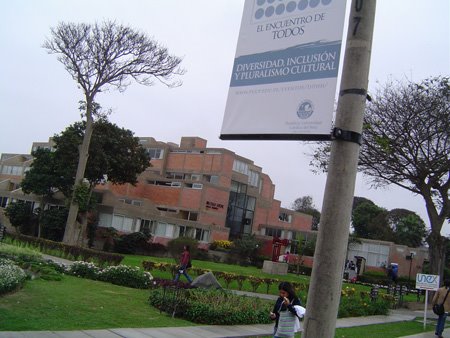
FE PUCP: TRABAJO PARA BLANCOS

Hoy estuve dando vueltas por la pucp, no buscaba la laptop de Mockus ni nada por el estilo. Solo transitaba por ahí.


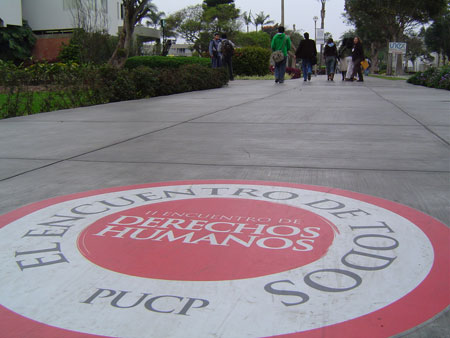
El llamado "tontódromo" o avenida principal estaba decorado por ocasionales avisos sobre el "Encuentro de derechos humanos".


Y entre el comedor central y la facultad de derecho se ha abierto una feria con ONGs de derechos humanos.

Sin embargo, cerca a la biblioteca central había un panel con anuncios y encontré un pedido singular.


Uds. contrastarán con otro anuncio que decía:


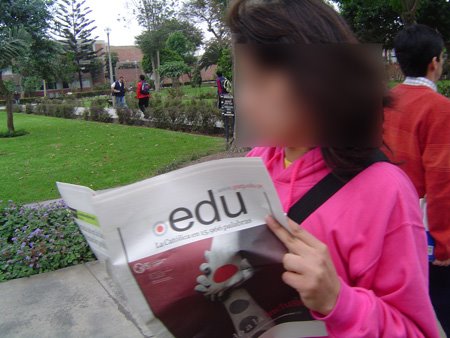
Acaso no contrasta ese papa noel con el llamado a la inclusión de su periódico estrella que ahora se ufana de distribuirse en "los cafés Delicass y San Antonio , así como en el Club Las Terrazas de Miraflores".


¿Alguna vez será de distribución en las unidades escolares estatales? ¿Llegará un numerito a algún comedor popular?


¿Y un papanoel más inclusivo?

sábado, septiembre 09, 2006

Esterilización forzada en inglés.../ forced sterilisation

Este es un artículo del Le Monde Diplomatique, sobre las prácticas del gobierno fujimorista contra la población peruana:


’REDUCING THE NUMBER OF BIRTHS PER WOMAN TO REDUCE POVERTY MADE MATHEMATICAL SENSE TO FUJIMORI. ANY METHOD OF BALANCING THE EQUATION WAS VALID’

Peru: the scandal of forced sterilisation

Peru’s government wants to extradite former President Alberto Fujimori from sanctuary in Japan in connection with assassinations in the 1990s. But his government’s eugenic policy, which encouraged the sterilisation of 300,000 women from poor Amerindian communities, has not been mentioned

By Françoise Barthélémy

HALLYCOCHA is an Amerindian community in Laguna Pampa in the Andean uplands, 50 kilometres from Cuzco, Peru. Here farmers till the land using ox-drawn ploughs. In one of the ramshackle houses lives Hilaria Supa Huamán, her hands deformed by arthritis; she has just come back from her chacra, the small plot where she grows corn, maize and potatoes.

In 1991 Hilaria was one of the founders of the women’s Peasant Federation of Anta, which is a largely rural province with about 80,000 inhabitants. Three years later she became its secretary-general and in that capacity took part in the 1995 IVth World Conference on Women in Beijing. That gave her the opportunity to speak to President Albert Fujimori. "He began talking to me about a family planning health care programme he wanted to launch. I said: ’Fine, provided husbands and wives take decisions jointly.’ ’Of course,’ he said."

Some months later, under strong pressure from the village nurse and without any detailed information, Hilaria had tubal ligation surgery and found it hard to recover. "They insult you by saying: ’Do you want to breed like a pig? Your husband will be angry if you do nothing,’" she says. "Afterwards they assure you that you will soon be back on your feet. That’s not true. The scar outside heals, but internally healing is slow because our work is so physically demanding."

She is not alone is suffering side-effects. Her friend who lives in Mollepata says that she too is "very much weakened" after tubal ligation. Disturbing facts have emerged from several communities including Mollepata, Limatambo and Ancahuasi. It was claimed that women visiting the dispensary for health checks for their children were locked in, sometimes in groups of 10 or 20. They were told they were to be vaccinated and then taken individually to the operating theatre and anaesthetised. They came out feeling groggy. Later they realised they had been sterilised.

Hilaria, with others, decided to make public what was happening. She and her colleagues were consequently excluded from the leadership of the Peasant Federation. They claim that the reprisals were the work of a gynaecologist, Washington Ortiz, who had pressurised patients who had had surgery to withdraw complaints.

The protest movement has swelled. "At communal and regional level, our council condemns the practice of forced sterilisation," says Rosas Beltrán, mayor of Anta and director of the Peruvian Network of Rural Councils (1). "With the Cuzco public prosecutor’s office (2), we organised opposition and aid for the victims."

The health minister, Luis Solari, set up a special commission on the activities of the voluntary surgical contraception programme (AQV) on 8 September 2001, less than a year after Fujimori had been deposed by the Peruvian Congress and fled to Japan. Solari entrusted four people, including Hilaria Supa Huamán, with the investigation. Also in September 2001 the Congress appointed a commission to look into irregularities committed in the AQV programme under Fujimori; its head was Hector Chávez Cuchón, a Congress member and president of the Federation of Doctors for the Ayacucho, Andahuaylas and Huancavelica region.

In July 2002 the investigators appointed by the health ministry (Minsa) published their 137-page report which revealed that 331,600 women had been sterilised and 25,590 men had had vasectomies between 1995 and 2001, stressing that they were blackmailed, threatened, or bribed with food; none was properly informed.This had been done in the name of a public health programme with the real aim of cutting the birth rate in the poorest regions; its main victims were Amerindian people from under-privileged areas: the Andean sierra, the Amazon selva (forest) and shantytowns around Lima.

Many official documents had been destroyed but 56 survived to show what had happened and who was responsible. Fujimori had the prime responsibility; he had been given monthly updates about the number of operations by the offices of former health ministers Eduardo Yong Motta (1994-96), Marino Costa Bauer (1996-99) and Alejandro Aguinaga (1999-2000). As soon as the report was published, there was a heated debate about the programme’s statistics and real objective. Alejandro Aguinaga, however, vigorously defended a plan which, he claimed, had allowed hundreds of thousands of couples to avoid unwanted pregnancies or abortions and conspicuously reduced mortality rates for mothers and babies.

Former minister Bauer cited (in La Républica on 25 July 2002) an inquiry undertaken by a United States agency between 1996 and 2000 in support of his claim that "90% of women of child-bearing age are completely satisfied with the family planning methods made available to them". But on the same page of the newspaper a woman called Ligia Rios explained how members of the Peruvian Institute of Social Security (IPSS) harassed her until she agreed to be sterilised. After the operation she had fever, bleeding and abdom inal pain and had been forced to give up work.

When Minsa’s final report was submitted to the Peruvian Congress in July 2002, its members decided to charge Fujimori and his three former health ministers with "genocide" and "crimes against humanity". A year later the congressional commission on human rights, chaired by parliamentarian Dora Nuñez (Moralising Independent Front) took up the charges and called for an investigation by the public prosecutor. The congressional standing committee rejected the proposal. The debate got bogged down in committees.

Fujimori responded from Tokyo, where he had been living since the Japanese government gave him Japanese nationality, sheltering him from possible extradition. He claimed that he had not approved forced sterilisation: rather that, for the first time in their history, Peruvian women had been given the opportunity to opt for responsible motherhood.

Peruvian and foreign researchers have been trying to establish the facts (2). Mandated by the committee for the defence of women’s rights in Latin America, lawyer and sociologist Giulia Tamayo has collected evidence from about 100 women from Lima, Cuzco, Loreto, Piura and San Martín. Her report (published 22 June 1998 by El Commercio, Lima’s biggest selling daily) cited abusive practices, failure to obtain prior consent and post-operative complications. There were deaths because of negligence, poor hygiene, inadequate training of personnel, the poor health of patients (tuberculosis or malnutrition) or even as a result of an undetected pregnancy. In 1999 a related book was published linked to a video documentary, Nada personal (Nothing Personal), which dramatically revealed that what had at first appeared from the government’s point of view to be objectives to be achieved in sterilisation had soon turned into forced quotas that had to be met by health professionals and establishments. A good performance brought rewards. Poor performances brought penalties. Nada personal described a coldly devised government programme; its author was threatened and intimidated. The Peruvian authorities of the time have never acknowledged the existence of quotas. Everybody keeps silent. But it is undeniable that there was an extraordinary increase in "voluntary" surgical contraception: tubal ligations went up from 81,762 in 1996 to 109,689 in 1997. In 1998 numbers fell to 25,995.

Arequipa, known as Ciudad Blanca, the white city, is 2,300m above sea level in the western Andes. It has a long tradition of social struggle and anti-authoritanarianism and its citizens challenged the Fujimori regime. Juan Manuel Guillén, a former rector of the university, was its mayor until 2003 and helped organise the vigorous protests that forced the current president, Alejandro Toledo, to abandon the idea of privatising two electricity companies. Guillén says: "There is a close relationship between the neoliberal policy imposed on Peru by the International Monetary Fund and the World Bank and the family planning programme engineered by Fujimori. In exchange for loans and the renegotiation of Peru’s debt, the IMF demanded privatisation, including the health sector, and opening up to investment. But it also wanted control of population growth, where the target was the poor or very poor and potentially dangerous sectors. That violated individual rights and the rights of families, and the moral principles that should underpin society."

Fujimori skilfully presented the reproductive health programme, saying on 28 July 1995 that the state would give low-income and poorly educated families access to methods of family planning available to the better off. He ended his speech with: "We have been and will be a pragmatic government without taboos or sacred cows. Peruvian women should be in charge of their own destiny."

The Peruvian exchequer alone did not fund the project: the US Agency for International Development (Usaid) was the main source of technical and financial assistance, contributing $36m, seven times more than the second largest donor, the United Nations Population Fund. Usaid was given the go-ahead by a US Congress that had a Repub lican majority traditionally opposed to birth control programmes; but Congress was focusing on domestic issues at the time, particularly its opposition to President Bill Clinton. There was also $2m from Nippon Zaidan, a Japanese foundation whose president Ayako Sono is said to be one of Fujimori’s main protectors.

NGOs including the American Pathfinder organisation received funds, as did the Peruvian feminist organisation Manuela Ramos (3). With the militants from the Flora Tristán Peruvian Women’s Centre, they had been fighting for women since the 1970s and did not conceal their enthusiasm at a longed-for opportunity to demolish the "retrograde" positions of the Catholic Church, which some members believed were linked to Opus Dei. The church hierarchy did indeed immediately challenge the decision to promote artificial methods of birth control and introduce sex education in schools. When alerted to forced sterilisations, feminist NGOs identified the danger that conservative sectors in society would try to destroy the family planning programme. Although they condemned individual case "mistakes", these NGOs felt they had to back a governmental strategy supported by major international bodies.

In 1995 Fujimori was re-elected with 64% of the vote, his image enhanced by the victory over the Shining Path guerrillas. There had been his self- inflicted coup of 5 April 1992 when Congress was dissolved and the judiciary reined in; and there had been the "fujishock" of ultraliberal measures, projected as a necessary adjustment. "That was when Fujimori began taking radical decisions on the taboo that is birth control," says Raul Wiener, political analyst and co-ordinator of opposition to the Free Trade Area of the Americas. "As a good mathematician, Fujimori was fascinated by figures. Reducing the number of births per woman to reduce poverty made mathematical sense to him. Any method of balancing the equation was valid, including the most brutal approach."

Fujimori tabled a bill on 9 September 1995 amending the General Population Law to permit the use of sterilisation (4). Congress approved a law that made sterilisation as legal as contraceptive injections, pills, diaphragms and sheaths. It was important that sterilisation was to be free. There was a rush of enthusiasm in all the ministries - headed by the new ministry for the promotion of women and human development - and in the armed forces and the national police.

Doctors, engaged for renewable periods of three months, were no longer given the option of objecting on grounds of conscience. Sterilisation festivals were organised in the country and pueblos jóvenes (shantytowns); days of games, dancing, concerts, theatre, puppet shows, fireworks, sport, plenty of food and free dentists and hairdressers. Posters showed modern families with few children and backward families with many ragged kids. Notices in Spanish offered tubal ligations and vasectomies, free of charge. By the time the festivities were over, the urban doctors had done a lot of work. But what did Quechua-speaking and mostly illiterate women understand of the information or letters of consent they had to sign? "Women doctors, nurses and nursing auxiliaries chatted with the women in the local dispensary and won them over with oil, corn, sugar and rice," according to a tourist guide at Machu Picchu, who trained at the Central University of San Antonio Abat in Cuzco. "All of that coincided with the government’s implementation of food aid programmes and infrastructure projects in out-of-the-way places. Fujimori, wearing a poncho, climbing out of a helicopter and filmed by television, turned up to inaugurate his projects. He was adored. They called him Chino Bueno."

Those circumstances explain to some extent the cautious approach of serious newspapers such as La Republica or El Commercio. Outside Peru the World Health Organisation fulsomely praised Peru’s family planning successes (5). Inside Peru accusations of possible abuses came from the Catholic Church. But were they well-founded?

Not until 1996 did a journalist from El Commercio, Julia Maria Urrunaga, take an interest in what was happening in remote areas. She heard a sad story from Tocache, a small village in the Amazonian forest, and travelled there to find out how a young mother had died. This woman had been immediately discharged after sterilisation in hospital, and sent home by motorbike, a 20-minute journey jolting along a dirt track. An infection developed. She died.

Urrunaga went to the house and met women neighbours trembling with fear. They had had the same operation and now their angry husbands were calling them putas (whores). "I saw the dead woman’s two children," says Urrunaga, " They were front page news and the report disclosed what had been hushed up." Trade unions, women’s groups, opposition members of parliament including Beatriz Merino, and Catholics were mobilised. But predominantly urban society took little notice. Urrunaga says they care even less now. "With the social problems and the crisis Peruvians are facing, it’s everyone for himself, plus a deep-seated disenchantment with the leadership."

In 1992 Dr Ramón Figueroa was a surgeon in the public health sector in Cuzco, that living museum of Inca civilisation, 3,400m up in the Andes cordillera. For a few months he was also director of the regional hospital. After 1996, with other colleagues working through the Association of Doctors, he denounced the sterilisation campaigns, stressing their racist nature. "The atmosphere was tense. Tackling an authoritarian and repressive government, with the corruption it fostered, left us open to serious threats," says Figueroa, currently an activist in the Democratic Decentralist party. "We were called agents of subversion. Gradually that inhumane policy was more or less abandoned by the government, yet without any self-criticism."

Fernando Robles Callomanay, of Aymara origin, has been the mayor of Ilave, the second largest town in the Puno region, for two years. He says: "The government of the time had a policy of ethnic cleansing, attacking the Amerindians and not whites or creoles. The consequences affect several aspects of economic and social life, in particular demographics." The birth rate has fallen sharply; schools and colleges are empty. It will be necessary to amalgamate them and some will disappear because of a lack of students. Most campesinas who underwent the operation suffer from complaints such as sickness and depression. "They are disapproved of by family and friends. The few men who have had vasectomies are taunted as eunuchs."

In the US there was, albeit belated, indignation, particularly after the Population Research Institute sent its representative, David Morrison, to Peru with a film crew; in January 1998 he published a report that generated sufficient interest in the US Congress for public hearings to be organised, during which victims told their stories. The public prosecutor’s office in Lima investigated complaints and accusations.

That led the US Congress to review the aid earmarked for family planning programmes and on 22 October 1998 the Tiahrt amendment (6) regu lating the use of Usaid funds accorded to Peru and other countries was adopted. Either beneficiaries complied with strict conditions or they received no more aid. There were commendable warnings about respect for human rights. But, after a second mission in December 1999 to Ayacucho and Huánuco, Morrison revealed that coercion, mis information, threats and scheming continued. He denounced Usaid’s failure to stop sending money to the Peruvian government, even though that funding was now illegal (7).

Since then rules governing sterilisation have been reviewed and amended along with all aspects of birth control policy. Reactionary movements within the church are influencing political life. Luis Solari, a doctor with a degree from San Marcos University, is the number two in Perú Posible, President Toledo’s party. He is a member of the department for the protection of life of the Peruvian Episcopal Assembly and describes himself as a man of faith. On becoming health minister in 2001, he created the special commission that published the final report on forced sterilisation.

"By doing that, he rejected the early investigations, particularly those that placed women’s freedom at the heart of the issue, and imposed his own conservative views," says Roxana Vásquez, a lawyer and director of the NGO Office for the Defence of Women’s Rights. "What is our main concern? That women’s rights should be guaranteed. Abortion is banned, a criminal offence. A middle-class woman can have an abortion without risk. Those who die, more than 350,000 a year, because they have had to use needles, are the poor. Luis Solari and his successor as health minister, Fernando Carbone, were and still are opposed to the use of contraception."

Although the new health minister, Pilar Elena Mazzeti, is more open-minded, nothing can be taken for granted. The Truth and Reconciliation Commission (CVR) is calling for changes; it has tried to summarise and analyse the causes of political violence over the past 20 years. According to its final report of 28 August 2003, the conflict has brought to light the "enormous social divides that have existed and still exist in Peruvian society" and "the link between poverty and exclusion and the likelihood of falling victim to violence". Victims are mostly Quecha-speakers from the poorest provinces, "insignificant" people whose fate is of no interest to the rest of the country.

Salomón Lerner Febres, rector of the Catholic University of Peru and CVR president, believes that this tragedy has much in common with the women who have undergone forced sterilisation. "But they are no longer seen as a matter of concern. In this terrible story ideology has blurred the picture; the stubbornness of the feminists, the great eagerness of Opus Dei to get hold of the case and the impudence of political leaders relying on ignorance and indifference. In my university we are going to set up an institute for human rights and democracy. And we will be taking up the issue of mass sterilisation again."


(1) Founded in Lima in January 2000, the organisation was strengthened by its later amalgamation with the Network of Alternative Municipalities. It is supported by international technical cooperation agencies from France and the United Kingdom. See: Remurpe website
(2) See the study by Peruvian public health consultant Raquel Hurtado, Aplicación de la anticonceptión quirúrgica como política de población en el Perú y violaciones a los Derechos humanos, Lima 2000. See also the book written by Maria-Christine Zauzich published by the German Justice and Peace Commission, Munich, 2000.
(3) It is estimated that the Peruvian NGO Reprosalud Manuela Ramos received $25m from Usaid 1995-2000.
(4) The 1985 Law on Population Policy prohibited surgical sterilisation. A national population council was mandated to monitor compliance but will be replaced by Promudeh.
(5) At an international seminar in 1996 on the reform of the health sector, Fujimori’s opening speech was fully endorsed by both the WHO and the Pan American Health Organisation.
(6) The amendment is named after its main backer, Todd Tiarhrt, a Republican member of Congress from Kansas.
(7) See David Morrison, A pesar de abusos comprobables, la Usaid sigue financiando programas de planificación familiar en Perù, Population Research Institute review, Front Royal, Virginia, January-February 2000.

sábado, agosto 26, 2006

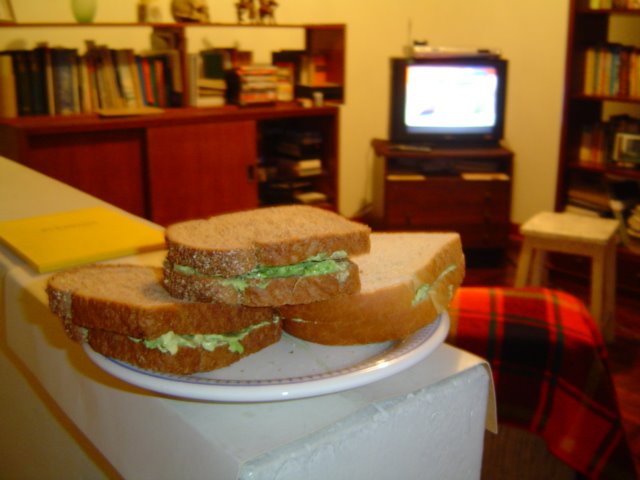
Comiendo esta noche... el rico pan con palta, a ver en Europa, como est� esa palta?

lunes, agosto 21, 2006

Autobahn a ritmo de merengue :)

¡Viva la fusión!
El Señor Coconut y su conjunto....

¡ Webstats4u (Nedstat) dejó de contar visitas!

Desde el sábado 19 a las 3pm (hora PERÚ) 20:00 GMT, el servidor de Webstats4u dejó de contar visitas. Así todos los que usamos este servicio nos quedamos aplanados en cero, sin saber de donde vinieron y a donde fueron los visitantes. Este humilde blog no tiene demasiados, pero la curiosidad siempre pica.

Migrar todas las páginas que uno administra a otro servicio es un poco pesado... a ver si arreglan el problema antes de mañana a las 8am, sino....

También
En el blog "Pirated Network", una noticia similar.

martes, agosto 15, 2006

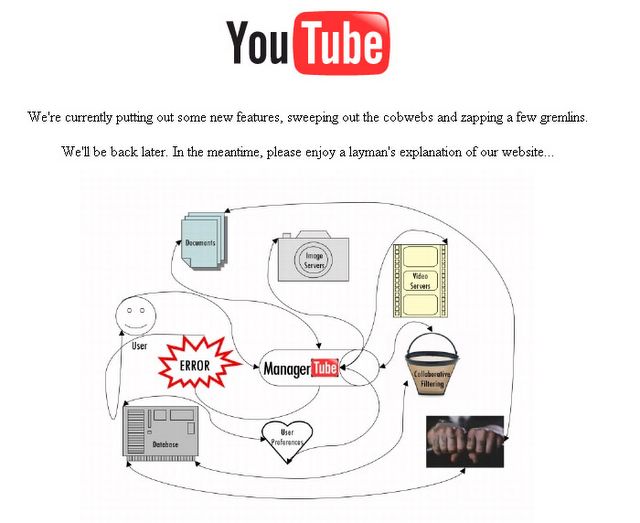
Se cayó YOUTUBE

"We're currently putting out some new features, sweeping out the cobwebs and zapping a few gremlins.
We'll be back later. In the meantime, please enjoy a layman's explanation of our website... "

¿Hasta que punto somos youtubedictos?
Pues hoy ni ver ni postear videos, hasta que terminen de arregar sus servidores los de youtube. ¿Y ud?


lunes, agosto 14, 2006

¿Dónde poner música LIBRE?

Brasil tiene una gran mediateca llamada Overmundo, un website colaborativo que tiene el objetivo de poner a disposición de todos la cultura brasileña en internet.

Ud. puede subir allí textos, agendas de eventos, fotos, música, films con licencias Creative Commons que permiten libre distribución, libre modificación, y solo obligan al reconocimiento del autor.

¿Nuestra biblioteca nacional peruana optará en algún momento por esta manera de difusión cultural?

Otro lugar para subir y descargar material con licencias libres es el popular archive.org. Se puede subir todo tipo de material y elegir que licencia (cc) colocar.

¿Ud. quiere descargar música sin ser acusado de delincuente?

Una opción más: JAMENDO
Música sin límites, graten y legal.

sábado, agosto 12, 2006

Lo nuevo hoy lo trae el abuelo

Tirando puentes entre generaciones, un abuelo se ha animado a lanzar un video a youtube.

Y no le está yendo nada mal, ¡con casi 250 000 visitas en una semana al aire!

No puedo evitar relacionarlo con los samples de música que uno hurga en grabaciones antiquísimas para insertarlas en pistas de drum&bass o del popular lounge.

Hoy nuestro abuelo se autoinserta en esta generación de videobloggers, encarnando lo nuevo desde un nick geriátrico.


viernes, agosto 11, 2006

La mítica aspirina

La ficción

Un camión con la marca de esta pepilla cruza Brasil, en una película en concurso del festival en Lima - Cine, aspirinas y buitres.
Película brasileña en la que el espectador es uno más sentado en este camión viendo como el destino convierte a un empresario alemán en fugitivo y un brasileño que escapa por un porvenir mejor.

La realidad hoy

Disparando desde la realidad, una nota conmemorando los 109 años del ácido acetilsalicílico descubro en El Universal.

viernes, agosto 04, 2006

Sabor latino en lengua aria

La migración lleva, devuelve y revuelve cultura. Mi hermana sumergida en algún Dorf alemán me envío la página de un grupete medio latinón que hace el furor por esas tierras migradas, tomadas, americalatinizadas.

Comprender más de dos idiomas hace la delicia de escuchar estas pistas que me suenan lejanas, que a pesar de la alegría, suenan a melancolía expatria.

Se las dejo para que gocen, en el radioblog... Culcha Candela.

jueves, agosto 03, 2006

Arabes trip hoperos?

Harold Johnson Temp of the down
Dandole click al enlace de arriba podrán escuchar un podcast lounge muy bueno. Un pedacito he colgado en radio Kinua para que se solacen.

sábado, julio 15, 2006

Uchpa y... Nirvana

¿Something in the way?
Había ripeado el disco de Uchpa que compre y envíe a mi hermana pero no había tenido el tiempo de ponerme escuchar. "Frechi" es un tema del disco "Lo mejor de Uchpa".
Les dejo ese pequeño tributo a Nirvana, en quechua. (en el Radio blog, ambos temas :)

lunes, junio 19, 2006

Letras de comida

Aquí - mucho gusto peru - he encontrado varios artículos interesantes sobre comida...
habrá que darse una vuelta...

lunes, mayo 22, 2006

A la moda reservista...


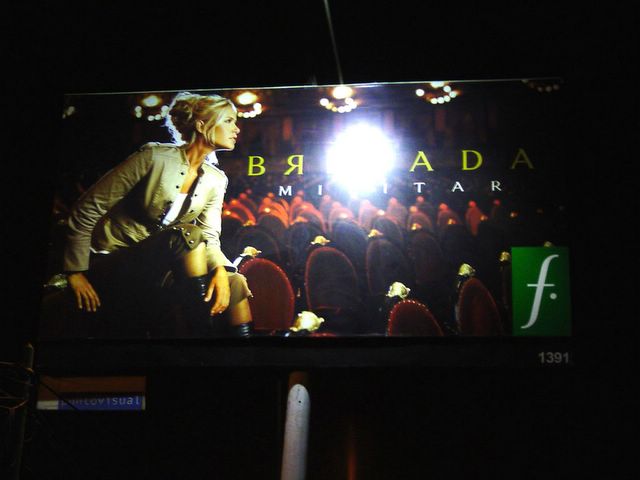
Recuerdan como se subió al carro de la primera vuelta la tienda por departamentos Ripley ?
Ahora es Saga la que se sube. Este afiche de brigada militar se luce hoy en Molicentro.

Mejor que el debate..

Esto está mejor que el debatucho de ayer...

sábado, mayo 20, 2006

Debate presidencial pagará impuestos...

De La agencia de noticias Cucúpress.

Debate pagará impuestos INC dice: no es cultural

Lima, mayo 20 (Cucú Press).- El debate entre los candidatos a la presidencia del Perú deberá pagar impuestos pues no ha sido calificado como “cultural” por el Instituto Nacional de Cultural. “No es ni siquiera entretenimiento tipo Floricienta” dijo un vocero del organismo calificador, advirtiendo a las madres de familia que se abstengan de exponer a sus hijitos al programa del domingo en la noche. Trascendió que el INC sostiene que se trata de una confrontación entre acusados de asesinatos (“Madre Mìa”, “El Frontón”, etc.) y que más bien deberían enfrentarse en el penal de Piedras Gordas. “Será la desagradable exhibición de un psicópata mentiroso forcejeando con un nacionalista expropiador” finalizó, no sin antes recomendar que más cultural sería que pasen films de Tarantino, Spike Lee y hagan lecturas de Stephen King, entre otros.


(cucúpress - tomado de lalista de cucú press / inscripciones al jgargure@pucp.edu.pe)

martes, mayo 16, 2006

MANA

Solo para recordar...
Av. Brasil 4089 - Magdalena - Lima Perú.
261-8609
y un correo
mana_integral@speedy.com.pe

Si es que alguno quiere comprar un panetón de coca.. quizás ese sea un buen lugar.

domingo, mayo 14, 2006

La ballena de Cisneros..

Solo para recordar, la vez pasada en un recital de Antonio Cisneros contó el caso de una ballena que era un problema de salud pública al haberse quedado varada en las playas de Conchán.

He encontrado el poema..

ENTONCES EN LAS AGUAS DE CONCHAN (VERANO 1978)

ENTONCES en las aguas de Conchán ancló una gran ballena.
Era azul cuando el cielo azulaba y negra con la niebla. Y era azul.
Hay quien la vio venida desde el Norte (donde dicen que hay muchas).
Hay quien la vio venida desde el Sur (donde hiela y habitan los leones).
Otros dicen que solita brotó como los hongos o las hojas de ruda.
Quienes esto repiten son las gentes de Villa El Salvador , pobres entre los pobres.
Creciendo todos tras las blancas colinas y en la arena : Gentes como arenales en arenal.
(Sólo saben del mar cuando está bravo y se huele en el viento.)

El viento que revuelve el lomo azul de la ballena muerta. Islote de aluminio bajo el sol.
La que vino del Norte y del Sur y solita brotó de las corrientes.

La gran ballena muerta.
Las autoridades temen por las aguas: La peste azul entre las playas Conchán.
La gran ballena muerta.
(Las autoridades protegen la salud del veraneante.)
Muy pronto la ballena ha de podrirse como higo maduro en el verano.
La peste es, por decir, 40 reses pudriéndose en el mar (o 200 ovejas o 1.000 perros).
Las autoridades no saben cómo huir de tanta carne muerta.
Los veraneantes se guardan de la peste que empieza en las malaguas de la arena mojada.
En los arenales de Villa El Salvador las gentes no reposan.
Sabido es por los pobres de los pobres que atrás de las colinas
flota una isla de carne aún sin dueño.
Y llegado el crepúsculo - no del océano sino del arenal -
se afilan los mejores cuchillos de cocina y el hacha del maestro carnicero.
Así fueron armados los pocos nadadores de Villa El Salvador .
Y a medianoche luchaban con los pozos donde espuman las olas.
La gran ballena flotaba hermosa aún entre los tumbos helados. Hermosa todavía.

Sea su carne destinada a 10. 000 bocas.
Sea techo su piel de 100 moradas.
Sea su aceite luz para las noches y todas las frituras del verano.

lunes, mayo 08, 2006

Asesinato de árboles: Av. Arenales


Una avenida en Lima, muy cercana al contaminado centro de Lima sufre hoy la TALA de añosos árboles. Más de 150 árboles son defendidos por los vecinos de la Av. Arenales, ante el atropello de la municipalidad de Lima y su alcalde Castañeda Lossio. La avenida luce hoy como exhumación de víctimas de la violencia tras el paso de los bulldozers. LIMA PERU.


Enlaces relacionados

Alcaldes en campaña (diario Correo)

Concejo de Lima tala más de 25 árboles para ampliar avenida (El Comercio)

Vecinos de la Av. Arenales indignados (CPN RADIO)

lunes, abril 24, 2006

Los años luz discos

Hoy descubrí un nuevo sello discográfico:
"Los años luz discos" Dos artistas en su lista: Liliana Felipe y Alex Krygier me llevaron a conocer el sello.

domingo, abril 09, 2006

3candidatos3 = 7.41%


Al 45.16% de actas, la ONPE nos da una aproximación de hasta donde llegamos aquellos que no apostamos por los tres infelices que ahora se la disputan.

3candidatos3

Valentín Paniagua 6.18% (el firme, el muñeco ganó en primera vuelta)
Susana Villarán 0.71% (ahí fue a parar mi voto)
Javier Diez Canseco 0.52%

¿Tendrá la izquierda que tomar medidas radicales?

¿Y ahora qué se viene?
Hay una cancioncita en mi radioblog...
"tienes que decidir como prefieres morir..."

Escúchela.

0.72% Susana Villarán

Susana Villarán: 0.72% dice la ONPE al 30.4% de actas.

:(

sábado, abril 08, 2006

Warphotographer / Fotógrafo de guerra

El jueves pasado fui a ver Warphotographer, documental de Christian Frei sobre el fotógrafo de guerra James Nachtwey. Lo había programado el Cinematógrafo de Barranco a las 6pm. Era yo el tercer cinéfilo que hacia cola. No llegó más gente. Y cancelaron la proyección. "Cinco mínimo" dijeron en boletería.

Me devolvieron los 6 soles de la entrada. Regrese a casa, y solo atine a descargarlo. Bajó rapidísimo. Consté que pague por verla y me cancelaron. Si tienen emule, sigan este enlace:
Warphotographer (2001) DVDRIP XVID.

Es un excelente documental.

viernes, abril 07, 2006

Borges y National Geographic

¿Jorge Luis Borges conocía el manuscrito que ahora National Geographic muestra en un documental (9 de abril- domingo)?

La tesis de que "Judas era un iniciado que traicionó a Jesús a solicitud de él y para la redención de la humanidad" ya fue ventilada en el cuento Tres versiones de Judas

¿Profetizó Jorge Luis Borges el documento encontrado?

jueves, abril 06, 2006

¿ Por qué esperar 5 años de Lourdes o de Humala?

Ya pues, dejen de entregar su voto a los banqueros. Si tanto dicen que votarían por Susana, voten por ella de una buena vez. La calculadora para la segunda vuelta.

miércoles, abril 05, 2006

Imaginemos a Lourdes y Susana Villarán...

Las últimas encuestas publicadas (el domingo) no dan demasiados puntos porcentuales a Susana Villarán.

Imaginemos el hipotético caso que Susana Villarán este compitiendo con Lourdes Flores en la segunda vuelta.


¿Por qué Ud. no votaría por Lourdes Flores?

martes, abril 04, 2006

La moda OLLANTA en RIPLEY

¿Reacomodo comercial nacionalista?

Una de las tiendas peruanas con el perfil más EXCLUSIVO - solo basta ver sus encartes promocionales que EXCLUYEN a la mayoría de rostros peruanos- viene promocionando dentro de sus tiendas la MODA MILITAR.

Así como lo leen. Aun no he visto los afiches en las calles, pero en víspera de elecciones, la cadena de tiendas por departamento RIPLEY S.A. ofrece en sus escaparates ropa y accesorios bajo el tema "MODA MILITAR".

¿Qué lectura debería dar el consumidor aterrado que va a votar por Lourdes y se dirige a esas tiendas a comprar sus prendas?

¿¿¿Será que el extranjero SERGIO COLLARTE ALVARADO, director ejecutivo de RIPLEY PERU nos da un mensaje subliminal desde el país del sur ante el advenimiento de un gobierno nacionalista???

¿O toda la directiva de esas tiendas por departamento preparan el camuflaje de algunos sectores de la sociedad ante el inminente paso de las botas humalistas?

domingo, abril 02, 2006

Los indecisos de Susana Villarán

En está última semana de decisiones he estado explorando los microcosmos que conforman mi familia y algunos amig@s o compañer@s de amig@s. Y he podido comprobar que si no existiesen las encuestas, todos votarían por la candidata de Concertación Descentralista, Susana Villarán.

Sin embargo la mayoría entregará su voto a otra candidata. Lourdes Flores. El tránsito ha sido decidido calculando la llegada del candidato Ollanta Humala al poder. El respaldo a Lourdes Flores nace de la frustración de no ver acompañado su voto de apoyar a Susana por una multitud de peruanos .

Sin embargo conociendo tanto a familiares como algunos amigos, en el futuro si existiese alguna injusticia por la cual protestar, sospecho que no saldrán a las calles a protestar.

Una democracia sin ciudadanos, que prenderán el televisor para divertirse durante cinco años con el nuevo circo instalado.

sábado, marzo 18, 2006

Recordar... DOCUMENTAL

Este jueves veintitres... documental del director RICHARD DINDO en el CAFAE

Jueves 23 / 7:30 p.m.

Ni olvido ni perdón (2003). Duración: 85'. Director:
Richard Dindo.

El 2 de octubre de 1968 una manifestación de protesta en
Ciudad de México fue reprimida a sangre y fuego con un resultado de 300
muertos, la mayoría jóvenes universitarios. Filmaciones de archivo y
diversos testimonios reconstruyen aquella matanza.

domingo, marzo 12, 2006

Leo Masliah incluyó a Alan García en su letra...


Previsor, Leo Maslíah no le abrió la MURALLA a Alan García sino que se fue a preguntar. Quizás ya sepa hoy como echarle llave a la muralla. [Escuche Radioblog KINUA]

lunes, febrero 27, 2006

¿Y quién regala pasajes a los candidatos?

Hace unos meses La Ventana Indiscreta (Agenciaperu) destapó el financiamiento de campañas electorales por parte de Fernando Zevallos. Peticiones como la siguiente:

"Estimado Fernando:
A continuación, detalló la ruta para el viaje que realizará Cesar Parra.
Sin otro particular, quedo de usted.
Rómulo Pizarro Tomasio”.


Eran solicitudes comunes a funcionarios de diversas empresas de aviación. Aquella vez fue Aerocontinente una de las aerolíneas que más vuelos facilitó.

¿Alguna unidad de investigación se anima a hurgar en los pasajes y líneas aéreas que favorecen hoy a los candidatos presidenciales?

¿Y a los congresistas? ¿Quién financia a los congresistas dados a conocer por la prensa como corruptos?

sábado, febrero 25, 2006

¿Violaciones de DDHH? JA, JA

Una noticia recientemente publicada, da cuenta de Ollanta Humala diciendo que sus presuntas víctimas eran "importantes mandos políticos y militares de Sendero Luminoso en la zona (de Madre Mía)." Es decir, que las violaciones de DDHH se cometieron contra PERSONAS pertenecientes a grupos subversivos. No fue contra personas inocentes, sino integrantes de grupos armados.

Imagínese Ud. lo siguiente. Una patrulla captura a una - presunta - subversiva (si es sentenciada, sigue siéndo presunta). Digamos que la capturaron in fraganti, mientras disparaba desde una base subversiva enclavada en la selva.

Luego, y siempre en el campo de la imaginación, la patrulla la lleva a su base. Allí, ponen en fila a la tropa. Y uno tras otro, 60 miembros de la tropa sacían sus ansias sexuales, violándola por cuanto agujero la horada. Para terminar el festín, le introducen ratas en la vagina (método de tortura aplicada en Chile), y picanas eléctricas por el cuerpo.

¿Podría esperar alguna reparación del estado por las violaciones a sus DDHH cometidas?

Pues no señores. Casi casi podríamos interpretar que tanto el estado como las organizaciones de derechos humanos están de acuerdo en que un SER HUMANO puede NO SER REPARADO a pesar de haber sido violados sus derechos humanos.

Así lo dice la ley de reparaciones para víctimas. Pues la definición de víctimas excluye a los miembros de organizaciones subversivas.


"Artículo 3°.- Definición de víctima

Para efecto de la presente Ley son consideradas víctimas las personas o grupos de personas que hayan sufrido actos u omisiones que violan normas de los Derechos Humanos, tales como desaparición forzada, secuestro, ejecución extrajudicial, asesinato, desplazamiento forzoso, detención arbitraria, reclutamiento forzado, tortura, violación sexual o muerte, así como a los familiares de las personas muertas y desaparecidas durante el período comprendido en el artículo 1° de la presente Ley.

Artículo 4°.- Exclusiones

No son consideradas víctimas y por ende no son beneficiarios de los programas a que se refiere la presente Ley, los miembros de organizaciones subversivas.
"


Entonces, el señor Humala puede ufanarse de decir que violó DDHH de miembros de organizaciones subversivas. La ley del estado lo respalda. ¿Las organizaciones de DDHH también?

miércoles, febrero 22, 2006

Museo inaugura Sala Toledo del crimen

Hoy llegó a mi correo un envío de Cucú Press, agencia de noticias del tío Gargurevich.
Lo reproducimos por ser de interés público


El Museo del Crimen
Inaugura “Sala Toledo”


Lima, febrero 22 (Cucú Press).- “Ya podemos inaugurar la Sala Toledo del Museo del Crimen Peruano porque ya tenemos el violador que nos faltaba” dijo hoy el Jefe de la Policía.
Como se sabe, la familia del presidente Alejandro Toledo , incluyendo al mandatario, ha reunido casi todos los casos posibles del Código Penal. “Es una rara cualidad familiar” dijo un juez. “Son delincuentes por naturaleza, algo innato, un don”, agregó.
En la nueva Sala Toledo se mostrará imágenes de los que han delinquido, lo que incluye a casi toda la familia: padres irresponsables, falsificadores de firmas, traficantes de terrenos, matones, todo tipo de transgresiones burocráticas, estafadores, etc.
“Estábamos aguardando la sentencia al sobrino violador Toledo Manrique y ahora ya, por fin, tiene un espacio de honor en esta Sala. Es, digamos, la cereza.” dijo el funcionario.
Se espera que la Sala Toledo del Crimen atraiga tantos visitantes como el Señor de Sipán.

martes, febrero 14, 2006

Peruanos rateros, es decir: NOSOTROS

Hoy el colaborador de La República, nuestro ex-ministro de justicia Baldo Kresalja reflexiona sobre nuestra fama de delincuentes en tierras extranjeras. Cuantas veces uno no ha escuchado historias de compatriotas que son tratados como ladrones tanto en Japón como en la hermana Bolivia. Y cuantas también uno no ha verificado en las noticias que los cabecillas de bandas delincuenciales son peruanos. Esta vez Baldo nos habla del mito urbano puro; de tres delitos cometidos en una calle de Barcelona, tres delitos imaginarios y uno de ellos tiene como ejecutor a un secuestrador también imaginado pero con patria: un peruano.

Desde ahí parte hacia una reflexión de cambio.

¡¡¡Ay Baldo!!! ¿Cómo no te quedaste en la cartera de justicia para remover a los grandes cabecillas de los medios?

¿Alguno de ellos tendrá la intención de cambiar?

lunes, febrero 13, 2006

PPK, la CONCHA acústica y las esteras

El sábado pasado fuimos a grabar a Pedro Pablo Kuczynski, en la flauta, después de desatado el escándalo del chekeman al tío Baruch.

Sentado al medio de la gran CONCHA, nuestro primer ministro resoplo frente al lleno total, público sentado en un amplio jardín rodeado de esteras. Habría que comparar un concierto de este tipo con alguno europeo. El ambiente era panamericano. Quiero decir, nunca vi tantos paneles publicitarios anunciando diversas marcas - Saga Falabella, Integra, Otto Kunz- metidos en el mismo lugar del concierto. Era como viajar de Lima a Asia por la Panamericana Sur y ser saturado por la publicidad. Quizás intentaban tapar las amplias esteras que aislaban la zona CONCHA del resto del club Las palmas.

Una amiga recordó - "en europa los auspiciadores del concierto salen en el programa al final y en letras chiquititas".

Antes del concierto Martha Mifflin (organizadora del concierto y directora de Filarmonía)hizo un recuento de todos los auspiciadores que hacían posible este concierto - hasta la ropa que lucía Mina Maggiolo- como si no bastase vernos abrumados por la publicidad desafiante.

Poco faltó para que últimase su discurso con un "No se vayan que después de la segunda parte rifaremos los dos meches que tenemos en la entrada".

El concierto sin duda, excelente, grandioso realmente. Y la entrega de los organizadores indudable. Felicitaciones.

Lástima que los auspiciadores sean tan chinches y poco discretos.

Me olvidadaba, al principio del concierto reventaron unos fuegos artificiales por la inauguración de una panaderia de Eisha, a unos 30 metros de la CONCHA de Kuchusco, distrayendo la atención de los asistentes. Felizmente el volumen del megáfono de los desatinados panaderos no era demasiado atronador.

Supongo que en ese momento la Sra. Mifflin estaría buscando un buen rifle de francotirador para acallar esa barahúnda.

¿Pasará nuestra radio siempre ochentera esta canción de los setentas?

Ayer leía en el portal de la BBC que el tema "Thunder in my heart" de Leo Sayer había llegado a lo máximo del ranking inglés, gracias a una remezcla realizada por DJ MECK.

Es decir se le dio un baño housero al tema y se lo relanzó al dial. ¿Harán algún día nuestras radios algo parecido en vez de seguir macheteándonos con los mismo temas de los ochentas, una y otra vez?

Tal como lo señala el blog El Cronico:

“El problema es que la mayoría de programadores son los mismos 80’s y apelan a fórmulas que ya funcionaron, y que conocen a la perfección”, sostiene Daniel Bartra, director de Top Latino, portal que ofrece un ranking oficial de Hispanoamérica, gracias a un monitoreo realizado a cerca de mil estaciones en 22 países de habla hispana.
Sin embargo, los oyentes no podemos quedarnos con el reaggeton combi u horas del lonchecito con sabor a formol.

A veces al mallki hay que darle la vuelta, arroparlo, cambiarle el traje musical y ofrecerlo con los nuevos aires de la época. Pero la creatividad está sepultada en nuestro dial.

Aquí les dejamos "Thunder in my heart" de Leo Sayer, remezclado por Dj Meck. En Radio Kinua.

domingo, febrero 12, 2006

Mujeres invisibles

Hoy leí una nota en cpnradio que tenía un remate lamentable. El titular era: "Pareja de lesbianas es objeto de maltratos en Cercado de Lima". Así acababa la noticia:

"A pesar que la sociedad limeña sigue manifestando intolerancia y rechazo por las orientaciones sexuales diferentes, los instrumentos legales no experimentan avances en los derechos humanos de lesbianas, gays, transexuales y bisexuales (LGTB). Ya es hora de castigar penalmente estas faltas de respeto contra la dignidad de las personas y el libre desenvolvimiento de su personalidad.

Al cierre de este informe Nelly Vargas y Katty Reboredo no han denunciado la agresión cometida por el jubilado Alexander Moreno, a las autoridades del distrito por temor a no ser escuchadas.

¿Acaso no hay instituciones que velen por sus derechos? Acaso con esta OMISIÓN de denuncia no están AMPARANDO la violencia contra ellas e INVISIBILIZANDOSE ante una sociedad homofóbica?

Su temor acaso no contribuye a la violencia que otros pueden cometer contra parejas de orientación sexual homosexual ?

Voy a buscarlas.. ojala las encuentre..ojalá las encontremos... donde estarán... como no van a denunciar a quien las maltrato de tal forma.

martes, febrero 07, 2006

Limántropos

Podcast de radio virtual portátil Limántropos, donde limántropo y limántropa hablan... cuentos... crónica radial... música? Escuche Limantropos

miércoles, enero 25, 2006

La censura es un nuevo servicio de GOOGLE

Google ha decidido implementar un nuevo servicio para los ciudadanos del mundo que viven en China, la censura en la búsqueda de contenidos. Este excelente servicio es auspiciado por la política de la empresa:

"Si bien eliminar resultados de búsqueda es inconsistente con la misión de Google, no proveer información... es más inconsistente con nuestra misión" según un comunicado oficial de google.


Así, otro gigante se suma a esta corriente neoliberal de alta competitividad. Se espera que el mercado de ciudadanos en el mundo que tendrán un servicio censurado crezca de 100 millones a 187 millones en dos años. Tal es el mercado de Internet de China. Si crece más, Google se sentirá afortunado, pues podrá desinformar a más personas en el mundo.

Yahoo y Microsoft ya se habían embarcado en esta política empresarial. Yahoo ha sido acusada de haber cooperado en la identificación de un remitente de correo electrónico que distribuia mensajes molestos al regimen, además haberse plegado ya al control y autocensura exigidos por las autoridades chinas. Microsoft también ofrece e impone a los 100 millones de internautas chinos la eliminación de palabras como "libertad", "manifestación", "derechos humanos".

Si Evo Morales implementase una legislación que cambia la palabra COCA cuando se refieren a la COCAÍNA, por está última, para una referencia que no degrade nuestro patrimonio cultural, las grandes transnacionales de la información ajustarán también sus buscadores y creadores de blogs? Si bien no sería censura, sería un esfuerzo por el cambio de mentalidad gringa hacia nuestra planta sagrada.

sábado, enero 21, 2006

Destinatarios - foto y envio parte de la muestra

El jueves pasé por la muestra DESTINATARIOS, de Sandra Gajate y Andrea Miranda, la miró quesada garland...

Bueno, puedes ir y tomarte una foto ahi mismo y mandarla por correo a quien quieras, SERPOST pone el envío. Es parte de la propuesta artística. más destinatarios.

Dónde: Sala Luis Miró Quesada Garland de Miraflores. Esquina Larco y Diez Canseco.
Horario: De lunes a sábado de 10 a.m. a 10 p.m., domingo de 2 a 10 p.m. Hasta el 11 de enero.
Hasta el 8 de febrero

martes, enero 17, 2006

Credibilidad y medios peruanos

Hubiera sido muy buena idea que la gente de la pucp, apoyo, idice, cpi y universidad de Lima y demás se hubieran puesto las pilas y de manera paralela a las encuestas sobre elecciones, hubiesen realizado una medición sobre la credibilidad de los medios. Declinante sin duda. Recordemos sino a Juan Gargurevich, quien ha publicado hace poco:

*********
Fundación propone novedoso Manual de Estilo Humalista

Lima, enero 7 (Cucú Press).- La prestigiosa FUMEPAPE (“Fundación Para Mejor Periodismo” ha decidido obsequiar a los reporteros de los medios locales con una excelente herramienta lingüística para redactar notas sobre el candidato presidencial Ollanta Humala.
“Todos los vocablos han sido tomados de los diarios y revistas de la semana pasada. Solo estamos haciendo una sistematización para ahorrar trabajo a los coleguitas” dijo un directivo de la Fundación.
El método es sencillo. Solo tiene que escoger una palabra de cada columna, juntar tres y la combinación será siempre una buena descripción de Humala. Por ejemplo: “ “Chavista, Arrogante y Cocalero” o mejor “Velasquista, Fascistoide y Rebelde”, etc.

ESCOJA UNA DE CADA COLUMNA Y ARME LA FRASE:

Chavista --- Outsider --- Rebelde
Castrista --- Primitivo -– Irracional
Pro Evo -- Nacionalista --- Cocalero
Etnocacerista – Forajido --- Impulsivo
Globalizado – Ignorante --- Recién llegado
Velasquista – Racista --- Pro-Judío
Marxistoide – Arrogante --- Oportunista
Sospechoso --- Astuto --- Artero
Populista --- Fascistoide --- Entrometido
Irrespetuoso --- Procorrupto --- Farsante.

”La Fundación cree contribuir así con un buen periodismo, objetivo y neutral, como el que se practica en los medios de comunicación nacionales. El “Manual Humalista” contribuirá decisivamente” concluyó el funcionario, no sin antes aclarar que se está redactando manuales iguales y apropiados para Alan García y Lourdes Flores.
..................

sábado, enero 14, 2006

El blog de don Alonso

Desde esta humilde columna comentar a EL CRONICO, quien hoy reflexiona sobre la situación del dial limeño, pleno de salsas y rock ochentero. De la radio su artazgo.

domingo, enero 01, 2006

NOVALIMA en vivo y en LIMA

Este jueves 5 de enero de 2006 estará NOVALIMA en la discoteca EL DRAGÓN celebrando el lanzamiento mundial del disco AFRO.

El Dragón, Nicolás de Pierola 168, Barranco.

Dos pistas de Novalima suenan en Radio Kinua, una pequeña muestra de lo que se van a perder si no van este JUEVES. Ay Bembe y Mayoral.


www.flickr.com


el_apu's photosMore of el_apu's photos


martes, diciembre 27, 2005

Fotoblog - 1era prueba

Esta es la primera prueba que hago a bubble share:


Estas todas son fotos de escolástico. A ver si desde el cuzco las ve. Ojalá.

martes, noviembre 01, 2005

lunes, octubre 24, 2005

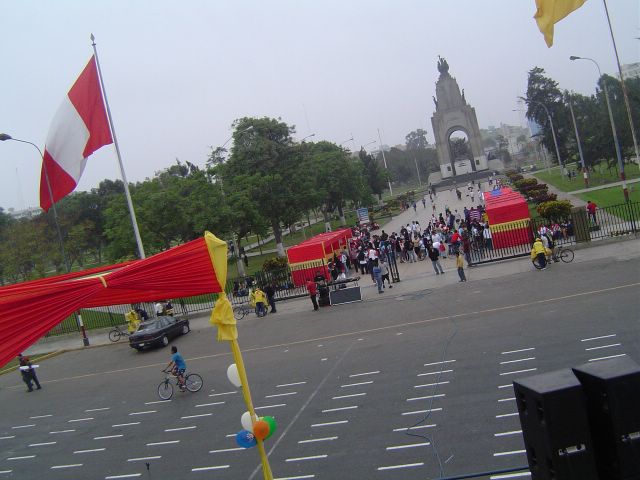
Irrumpen fujimoristas en evento de Amnistía Internacional

El domingo 23 fui a la maratón convocada por Amnistía Internacional, dedicada esta vez contra la violencia a la mujer. Si bien no corrí visite algunos de los stands, a eso de la 1 de la tarde. A esa hora la maratón había terminado, y algunos estaban atendiendo como los stands de Demus, contra la explotación sexual de niños, armas bajo control y otras instituciones.

Llegan los seguidores del prófugo Fujimori

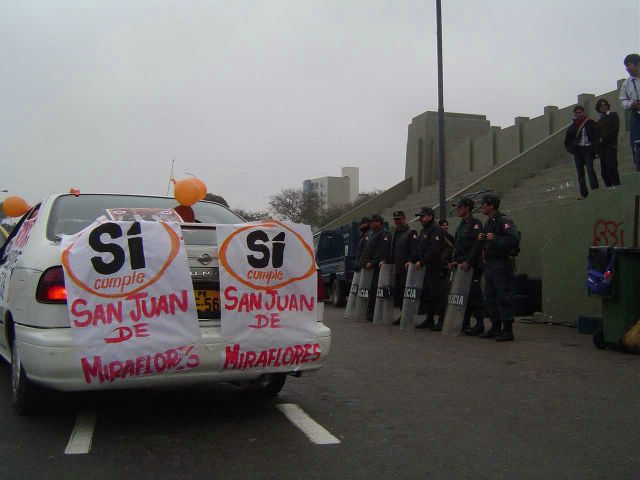
Intempestivamente, cuando se esperaba la participación de Rafo Raez y la Sarita en el escenario montado, apareció una larga columna de automóviles con globos naranjas y bastante bulla. Eran los seguidores del prófugo dictador Alberto Fujimori quienes con cachita y soberbia se estacionaron en la avenida de la Peruanidad. Justo frente a los stands de Amnistía. La jefa de prensa solo atinó a retirar todos los carteles de Amnistía Internacional, mientras la multitud de seguidores anaranjados se ubicaban entre el escenario y los stands.

Pueden ver el video haciendo click la siguiente foto.


desde el escenario viendo los stands
6 policías intentan proteger a los activistas de Amnistía de los partidarios del genocida
llegan los seguidores del genocida
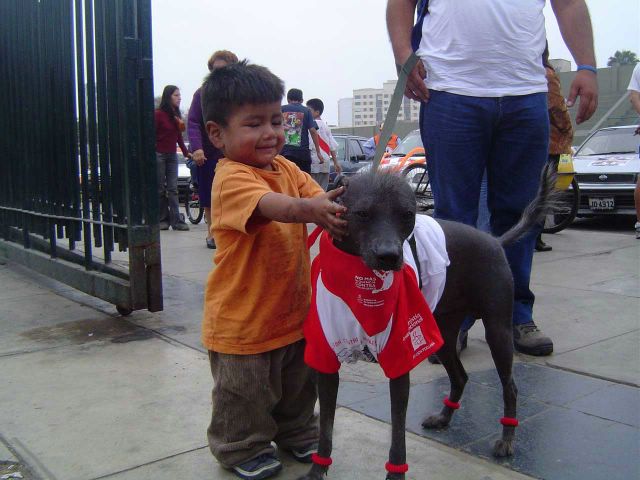
perro chino con polo marat�n
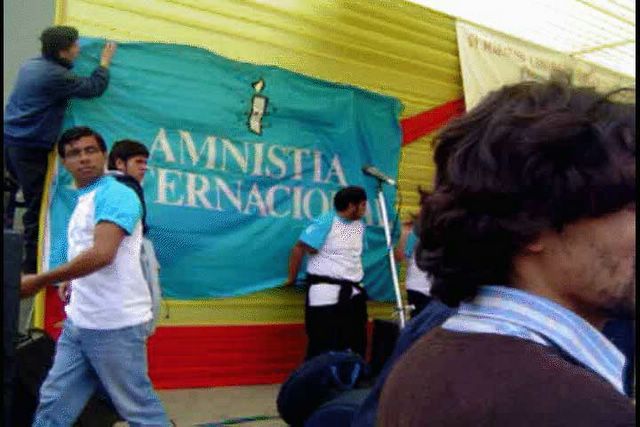
Escenario amnistia

lunes, octubre 17, 2005

El llamado buen cine...

Once lugares recopilados por la revista AVENTURA CULTURAL:


1- CENTRO CULTURAL DE ESPAÑA (Natalio Sánchez 181, Lima)

2- ALIANZA FRANCESA (Av. Arequipa 4595, Miraflores)

3- BIBLIOTECA NACIONAL (Av. Abancay Cuadra 4, Lima)

4- CENTRO CULTURAL BRITÁNICO (Bellavista 531, Miraflores)

5- CENTRO CULTURAL CAFAE SE (Av. Arequipa 2985, San Isidro)

6- CC LA NOCHE DE BARRANCO (Bolognesi 307)

7- CENTRO CULTURAL RICARDO PALMA (Av. Larco 770, Miraflores)

8- CINEMATÓGRAFO DE BARRANCO (Perez Roca 196)

9- VENTANA INDISCRETA U. DE LIMA (Javier Prado Este cdra 42 Pabellón E-1 3er piso)

10- MUSEO DE ARTE DE LIMA (Paseo Colón 125, Lima. T. 423-6332

11- CC DE SAN MARCOS (Parque Universitario – Centro Histórico de Lima)

domingo, septiembre 25, 2005

Gnomus

Parte de la obra de Mussorgski - Pictures in an exhibition. En Radio Kinua, el Gnomo.

sábado, septiembre 17, 2005

Tinta Mortal - Video terror independiente...

Ya está en la red el corto TINTA MORTAL realizado por algunos desquiciados compañeros de la universidad.

Además el grupete marujatrax en un arranque corístico también tiene un video sobre las pistas de la avenida aviación de noche hasta la molinaza. Pueden verlo en este lugar: tracking marujatrax escolástico kinua video

jueves, septiembre 15, 2005

El hilo de Ariadna - Alfonso Noriega -electrónica centro cultural españa

El domingo pasado marujatrax (un fragmento de maruja) estuvo en el Centro Cultural España, haciendo tristemente de las suyas. Ese día, recibimos un disco llamado el hilo de ariadna.

En la caratula del material se podía leer

"Tal vez la misión sea la destrucción masiva de egos y por ende de almas ó tal vez como dijo nietzche "solo donde hay sepulcros hay resurrecciones".

Alfonso Noriega
demo: "El Hilo de Ariadna"
- notraduzcastuocasoalohumano(demo)

Colgamos un track de su repertorio. Es diferente al resto de tracks, y dedocráticamente escogido entre todos ellos por mi.

No estoy seguro pero creo que estara este 22 de setiembre en el centro cultural españa...ojala conteste a mi mail o lea este mensaje.

jueves, agosto 25, 2005

Serpentina Satélite: Carlos Mariño y Dandileon

La banda del Mariño, autonombrada "Serpentina Satélite" ha construído una nueva pista llamada Dandileon. Este track tiene su origen en la leyenda griega de Solifeo. Cuentan, a través de Dandileon, que un día Dionisio convocó a todos sus compañeros dioses a un festín donde se iban a comer al dragón Solifeo. Ese día, sólo llego Dandileon. La frustración fue tan extrema, que de los fauces del dragón brotó leña de algarrobo encendida y quemó al único presente. Dandileon pereció bajo el fuego del Dragón, mientras un frustrado Dionisio bebía una copa de su propia música.

Puede escuchar Dandileon en Radio Kinua.

lunes, julio 25, 2005

Llaqta maqta o "joven del pueblo"

Llaqta maqta significa "joven del pueblo". Es un género musical tradicional, propio del distrito de Chungui. Se canta sobre todo de noche, con gran vigor y entusiasmo, por jóvenes de ambos sexos, durante la preparación del chuño. Según los comuneros, el llaqta maqta permite a muchachos y muchachas conocerse mientras cantan y bailan, enamorarse y casarse. Pero el llaqta maqta también alegra a todos en festividades tales como el safa casa, los bautismos, las fiestas patronales y los cumpleaños. Tocando la bandurria, los comuneros cantan y bailan desde siempre. Las fuerzas subversivas y contrasubversivas persiguieron y asesinaron a muchos pobladores, pero en la actualidad el chunguino sigue cantando y bailando su llaqta maqta, que es considerado como el himno de su pueblo. Puede escuchar 4 pistas de Llaqta maqta en Radio Kinua.

UPDATED:
Todo el disco puede escucharlo desde Archive, en este enlace: música de Chungui

domingo, junio 26, 2005

As� se celebra

HACKEAN A TNP, CPN RADIO Y AMERICA TV

En un despliegue singular un grupo al parecer chileno hackeo medios de comunicación peruanos como son Televisión Nacional del Perú, Cadena Peruana de Noticias y América Televisión. Más información en el Observatorio de Medios Perú

domingo, junio 19, 2005

Ralph Myerz and the Jack Herren Band y su nuevo disco

Algunos de ustedes recordarán que en el 2003 Ralph Myerz and the Jack Herren Band debutaron con un disco fenomenal llamado "A Special Album". A ver si en los próximos días lanzo por radio kinua alguno de los temas de ese album. La novedad está en que he descubierto que en el 2004, en setiembre, estos sujetos sacaron un nuevo disco llamado "Your new best friend" editado en Noruega solamente. Aquí un track melódico que tiene ciertas semejanzas con el grupo Röyksop. Esta vez es la pista llamada "Just escape from the island", por radio Kinua.

Uña Ramos en Radio Kinua

No sé si alguno de mis lectores le sigue la pista a Uña Ramos. Pues aquí en casa hay un vinilo de mis padres que es antíquisimo, pero fue ese disco el que puso su música en mi background sonoro infantil.

Ahora el hombre tiene 71 años y sigue como los dioses. He aquí un artículo publicado en el diario argentino pagina 12, el 22 de mayo del 2005, con ocasión del viaje de Uña Ramos a Argentina, este año, para presentación de su nuevo disco LIVE IN FRANCE 2005.

Para delicia de muchos, en Radio Kinua está sonando el track HONO, del disco "La magia de la quena", grabado en 1982 en Francia.

domingo, junio 12, 2005

Novalima, el que no tiene de inga tiene de downtempo

Tras dar vueltas por todas las tiendas de discos de Lima, encontré dos discos de este colectivo formado en el 2001 por cuatro músicos peruanos residentes en Lima, Barcelona, Londres y Hong Kong. El "NOVALIMA" (2001) y "AFRO" (2004). De este último, uno de los tracks más deeps es "Mandinga". NOVALIMA explora la fusión de percusiones afro-peruanas y latinas con ritmos downtempo, dub, broken y house. Puede escuchar"MANDINGA" del último disco de NOVALIMA por Radio Kinua. Sumamente recomendable para un amanecer lounge.

Novedades Radio Kinua: Antara Nazca y Sasha - Fundacion (2005)

Esta vez tenemos como novedad en Radio Kinua una grabación realizada a una Antara NAZCA. Esta grabación es posible gracias al equipo que se encuentra trabajando en el Museo Nacional de Arqueología e Historia del Perú, en el proyecto Waylla Kepa que graba (samplea) instrumentos prehispánicos. Hasta el momento han llegado a grabar 69 instrumentos, de aproximadamente 2000 que tienen en sus almacenes.

"Esta Antara Nazca de modelo clasico nazca, tiene el modelo más recurrente, es el de mejor acabado, y con mejores condiciones acústicas que otras. Antara con 11 tubos, embocadura de forma ojival. Antara con registro muy agudo, que es muy similar a los sicus usados actualmente" explica el investigador Carlos Mansilla Vasquez, integrante del equipo que registra el sonido de estos instrumentos prehispánicos. Pueden escuchar cual es el sonido de una ANTARA de CERAMICA NAZCA en RADIO KINUA.

También estoy compartiendo una pista dulce del CD Fundacion de SASHA :


"El superastro británico de las tornas regresa en junio con un nuevo disco bajo el brazo. Ya no son temas originales como en Airdawndagger, ni advanced-remixes como en Involver. Fudancion es un disco mezclado, un dj set, pero al estilo Sasha."
Sasha lanza "Fundacion" en junio - Sentido Urbano

"Completed in just a few days, 'Fundacion : NYC' is the sound of Sasha's Ableton/Maven set-up in live action and enables Sasha to mix some of the coolest electro-house sounds around with forgotten classics he has revived and reworked. Sometimes as many as five tracks come together at once to create completely new interpretations – though Sasha's innate ability to clarify and streamline sound means things never get over-crowded. Instead 'Fundacion' captures a great DJ having the time of his life. " Sasha - Fundacion : NYC Label: Global Underground | Release Date: Monday, June 13, 2005


Puede descargar el disco completo desde este enlace - Sasha - Fundacion (2005)

martes, mayo 24, 2005

Documental sobre EL FRONTON

"Camino Barbarie" es un documental peruano que trata sobre el retorno en nuestros días a la isla del Frontón. Dirigida por Javier Becerra, se presenta este jueves 26 de Mayo a las 7.30pm en el centro cultural CAFAE, Av. Arequipa 2985, San Isidro.

Este documental experimental nos conduce a través del recuerdo de aquellos trágicos días de 1986. Valiéndose de material de archivo, el director deconstruye la masacre en una coreografía de acciones históricas sucesivas, y una atmósfera sonora que intercala la inminencia tanto de la masacre como del olvido.


La entrada es LIBRE

Lugar:
Centro Cultural CAFAE-SE
Av. Arequipa 2985, San Isidro

Hora:
7.30pm

Día:
Jueves 26 de Mayo
Teléfono:
442-4422 / 442-0065


Camino al penal (2004)


En la isla (2004)


Material Relacionado:

LAS EJECUCIONES EXTRAJUDICIALES DEL PENAL DE EL FRONTÓN Y EL LURIGANCHO (1986) (Informe Final de la Comisión de la Verdad y Reconciliación)

domingo, mayo 08, 2005

mArUjAtrax en fiesta UNDERFASHION

Este sábado 14 de Mayo estará mezclando pistas mArUjA en Av. Mariategui 1378 Jesús María Alt. Cine Las Américas. Información de los organizadores del evento UNDERFASHION: 99972318.

Ese día mArUjAtrax también será parte de la performance de Frau Diamanda.

Estarán también DJ Nuburia, DJ Coco Malnborg y Jardín.

El lugar: UNDERFASHION cuenta esta vez con dos ambientes confortables, tragos de cortesía (VIP), sillones para descansar.
CAPACIDAD LIMITADA